Sonic vs Oscillating Toothbrushes
How the two main types of electric toothbrush work, and what the evidence says about which cleans better.
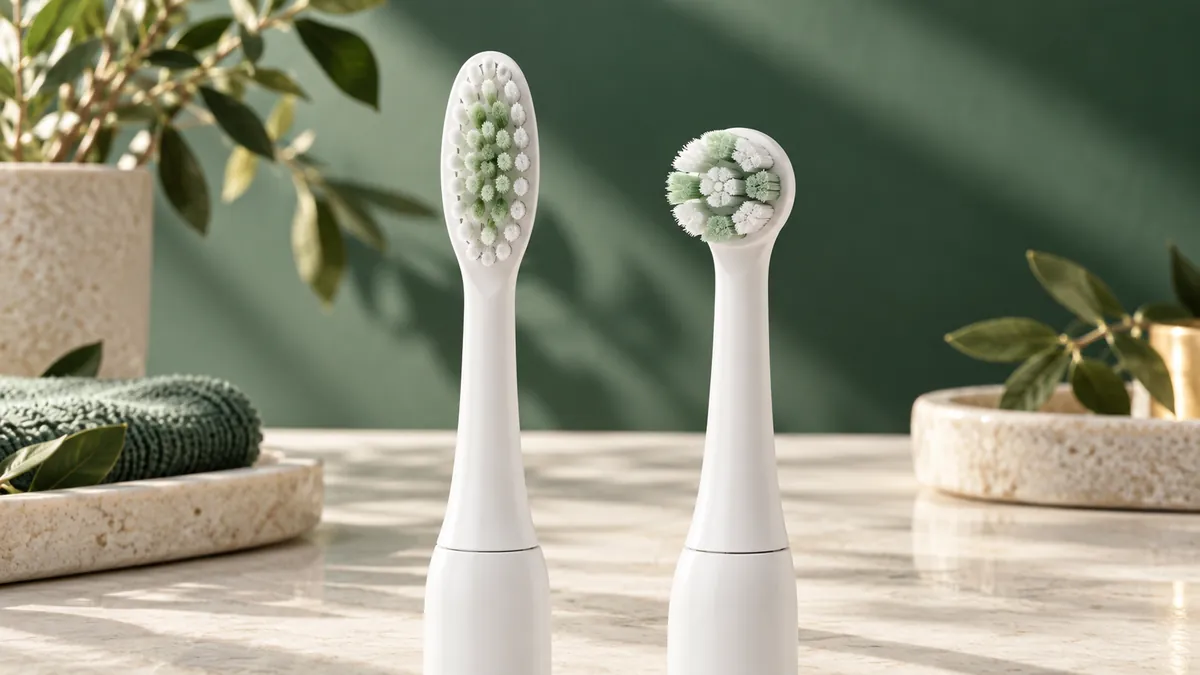
Sonic Brushes
Sonic brushes move the bristles from side to side at high speed. As the brands state them, speeds in our comparison range from 31,000 movements a minute (Philips Sonicare 3100) to 62,000 (Philips DiamondClean 9000), with the SmilePro Sonic at up to 48,000 vibrations a minute.
Oscillating Brushes
Oscillating-rotating brushes have a small round head that turns one way and then the other. Oral-B, the main brand of this type, says its iO brushes add micro-vibrations.
A 2010 Cochrane review of 17 trials found some evidence that rotation-oscillation brushes reduce plaque and gum inflammation more than side-to-side brushes in the short term, but the difference was small and of unclear importance.
Comparison
| Sonic | Oscillating | |
|---|---|---|
| Movement | Side to side, at high speed | Turns back and forth (Oral-B iO adds micro-vibrations) |
| Brands in our comparison | Philips Sonicare, SmilePro | Oral-B |
| Against a manual brush | Powered brushes reduced plaque and gum inflammation more than manual ones (Cochrane 2014) | The same review covers both types |
| Against each other | A small short-term edge for rotation-oscillation, of unclear importance (Cochrane 2010) | |
| Pressure sensor | On the Philips models we compared | On all the Oral-B models we compared |
Verdict
Both types clean better than a manual brush (Cochrane 2014). Delivering Better Oral Health, the UK government's guidance for dental teams, says the evidence is not enough to say any type of powered brush is better than another. Choose on comfort and features such as a pressure sensor and timer, and check the price of replacement heads.
Compare electric toothbrushes