What to Look For in At-Home Whitening and Daily Oral Care
The ingredients, methods and habits that matter most when you choose at-home whitening and everyday oral care products.
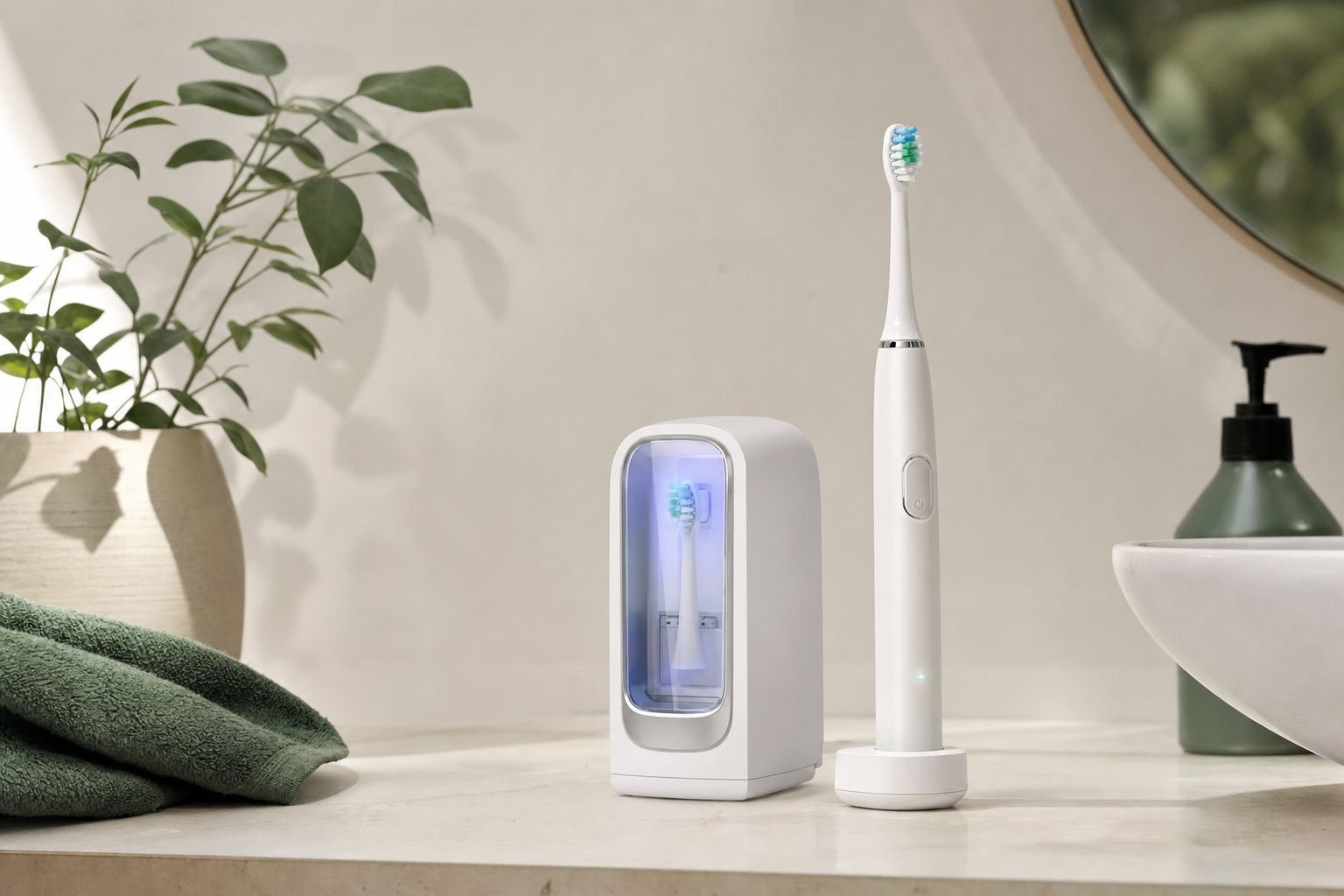
Brushing and Toothpaste
A Cochrane review found that powered toothbrushes reduce plaque and gum inflammation more than manual brushing. Both sonic and oscillating brushes work. Useful features are a pressure sensor, to stop you brushing too hard, and a two-minute timer. See choosing a toothbrush.
Use a fluoride toothpaste. After brushing, spit but do not rinse, so the fluoride stays on your teeth. See toothpaste explained for the right strength for each age.
Choosing a Whitening Format
LED kits pair a whitening gel with a mouthpiece and light, and sessions are usually shorter than with strips. Strips need no device and are the simplest way to start. See LED vs strips.
In the UK and EU, the law limits the hydrogen peroxide in whitening products sold to the public, so most kits sold there use PAP or other alternatives. Ask a dentist to check your teeth and gums before you whiten. See stained teeth for the rules on who may whiten teeth.
Habits That Matter
- Brush for 2 minutes, twice a day, with fluoride toothpaste.
- Clean between your teeth with floss or interdental brushes. See cleaning between your teeth.
- Have acidic drinks less often, ideally with meals. See drinks and your teeth.
- See your dentist as often as they recommend. See dental check-ups.