LED Whitening Kits vs Whitening Strips
How the two formats differ in how they work, session time and side effects, and what the evidence does and does not show.
How Each Works
LED whitening kits
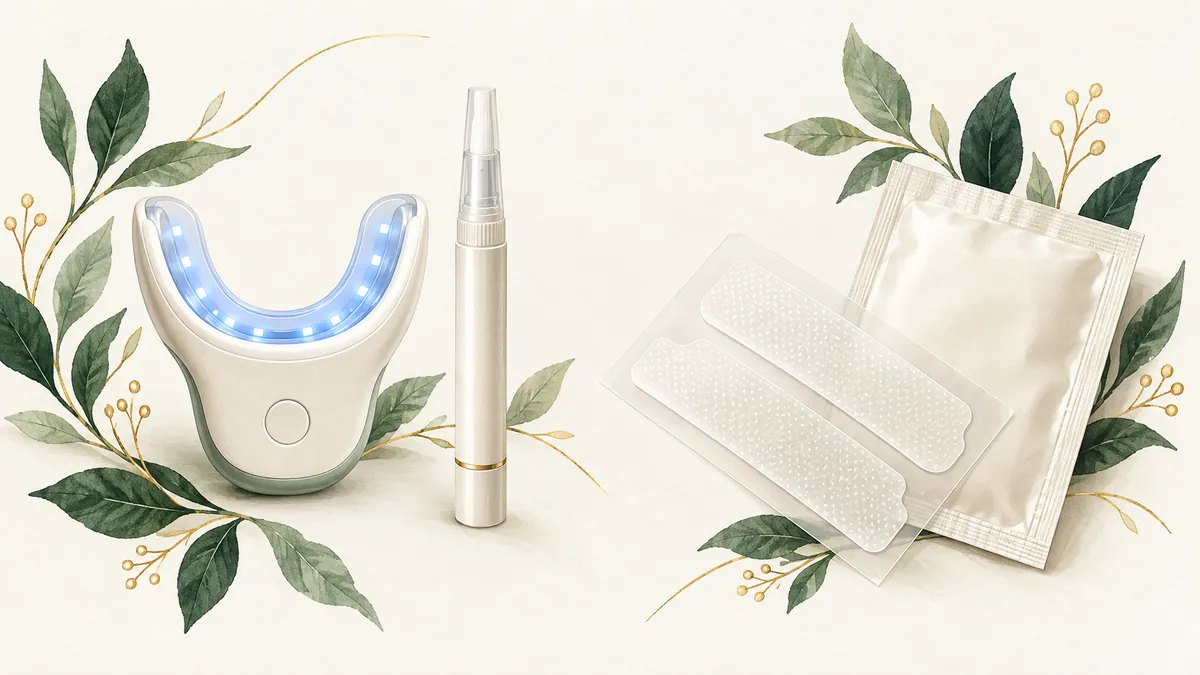
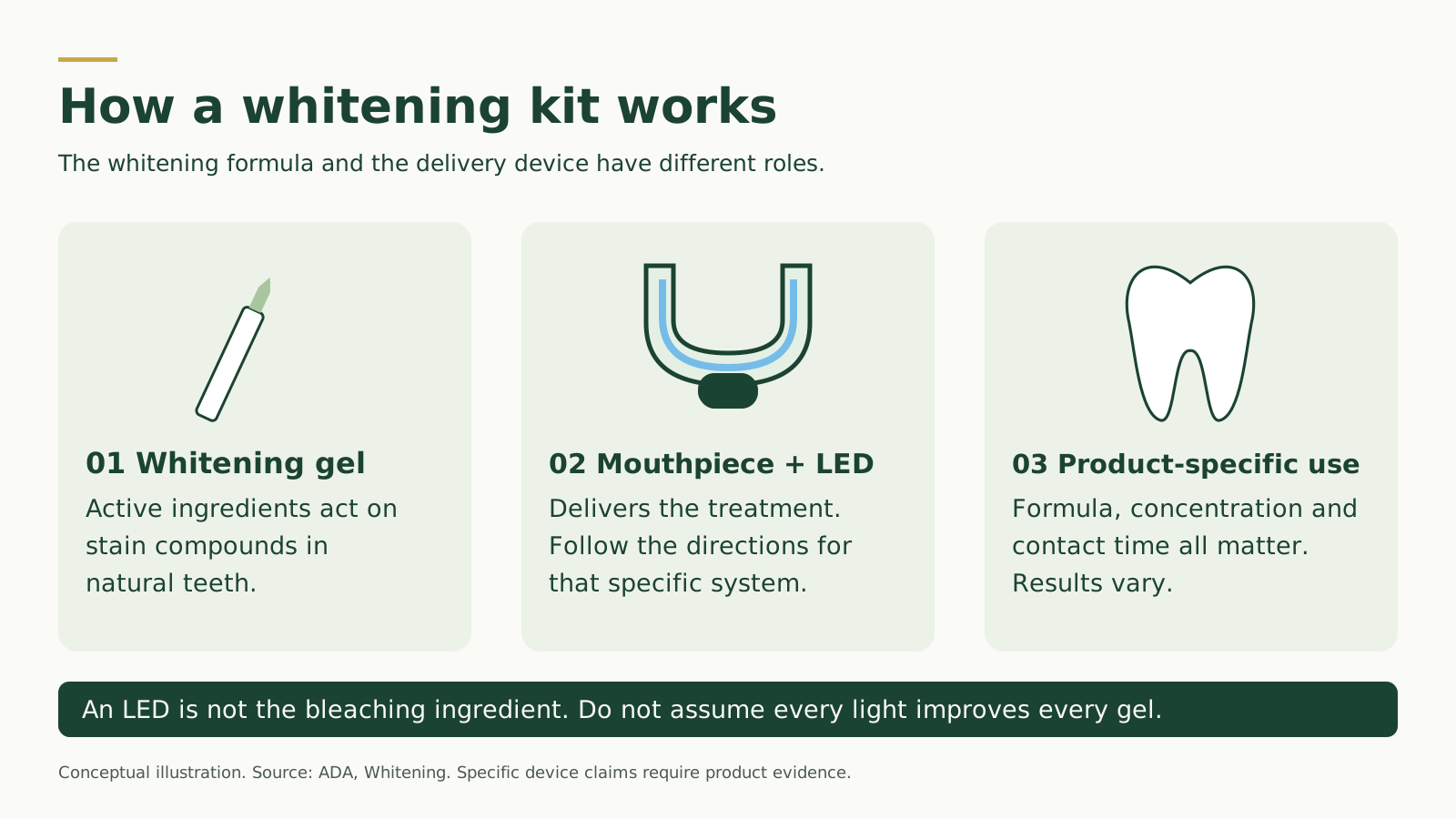
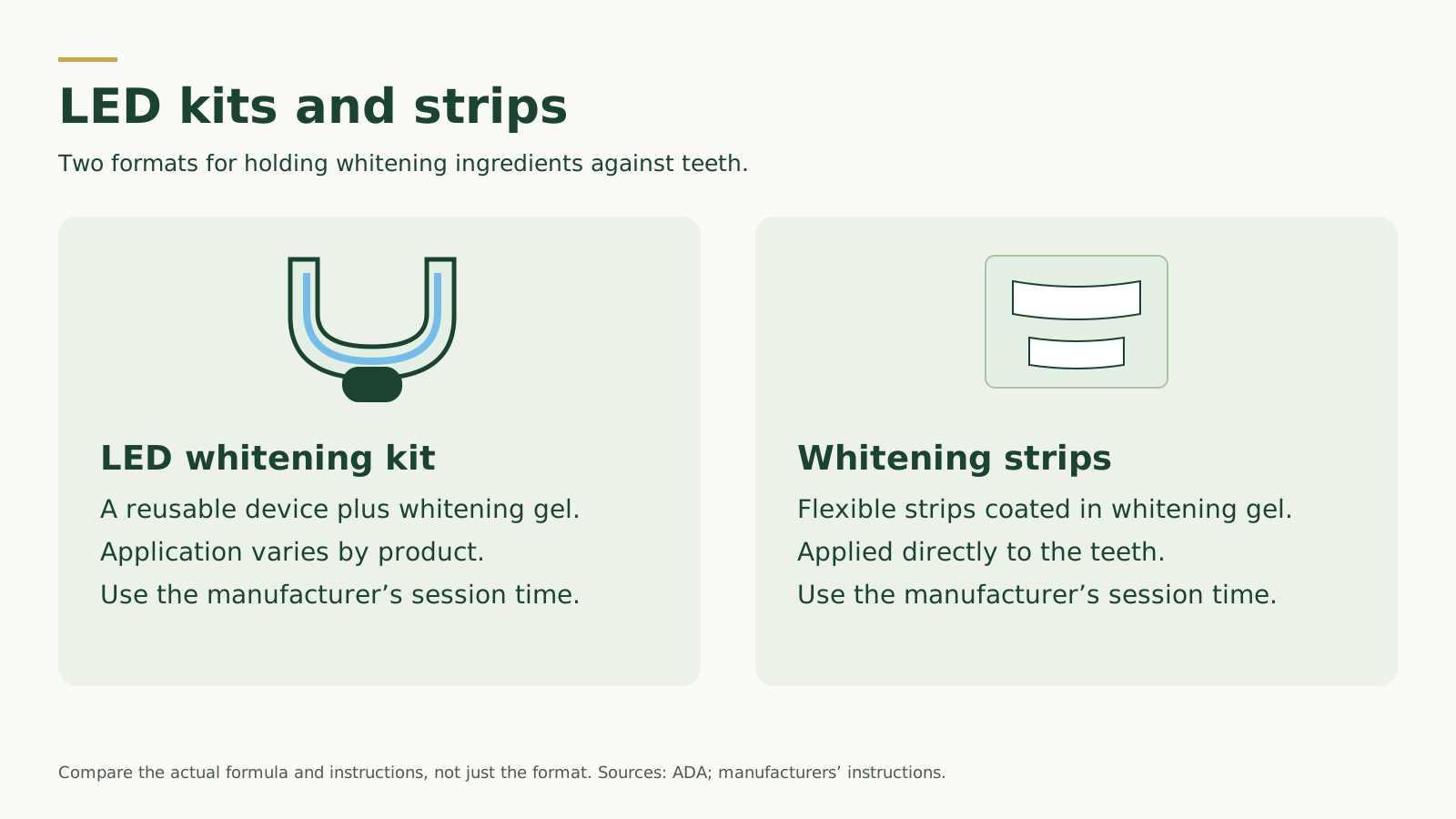
You paint a whitening gel onto your teeth (hydrogen peroxide or carbamide peroxide in Australia and the US, usually PAP in the UK and EU) and wear a mouthpiece with built-in lights. Session times differ by kit: in our kit comparisons they range from 8 to 40 minutes, and SmilePro's is 10 minutes. The American Dental Association describes lights used in dental surgeries as intended to accelerate and enhance bleaching. For home kits, the claims are the brands' own: SmilePro, for example, says its blue light helps break down stains and its red light makes treatment more comfortable.
Whitening strips
Thin, flexible strips coated with whitening gel are pressed onto the teeth. Wear times differ by product: in our strips comparison they range from about 15 minutes (dissolving strips) to 60 minutes. No device is needed. The American Dental Association says most whitening strips rely mainly on peroxide to bleach teeth.
Comparison
| LED kit | Strips | |
|---|---|---|
| Session time | 8 to 40 minutes in our comparisons (SmilePro: 10 minutes) | About 15 to 60 minutes in our comparison |
| Whitening claims | The brand's own: SmilePro says up to 8 shades whiter in 7 sessions | The brand's own; they differ by product |
| Sensitivity | Possible. The ADA links it to gel strength, contact time and the intensity and duration of light use | Possible. The ADA links it to gel strength and contact time |
| Coverage | The tray covers the whole row of teeth | Each strip covers the teeth it is pressed onto |
| Device | Yes (rechargeable or battery-powered) | No |
| Prices | Compared in our kit guides | Compared in our strips guide |
Verdict
Both formats hold a whitening gel against your teeth, and the gel's strength and contact time matter most. A 2018 Cochrane review of home whitening rated the evidence on how well it works as low to very low certainty, and found sensitivity and mouth irritation were the most common side effects, usually mild and temporary.
Choose an LED kit if you want short sessions and a tray that covers the whole row of teeth. Choose strips if you would rather not use a device. Either way, compare the active ingredient, session time and guarantee, and see a dentist first if your teeth are sensitive.
Compare whitening strips