Best Teeth Whitening Strips (2026)
We compared the whitening strips on sale in Australia, the UK and the US on price per treatment, formula, wear time and guarantee. Pick your market below.
Top picks at a glance
- Australia: 1. Oral-B 3D White Luxe Advanced Seal (8.3); 2. White Glo Advanced Whitening Strips (7.9); 3. SmilePro Teeth Whitening Strips (7.8)
- UK and EU: 1. MySweetSmile PAP Whitening Strips (21 treatments) (8.1); 2. Spotlight 14 Day Ultra Whitening Strips (8.0); 3. SmilePro Teeth Whitening Strips (UK) (7.8)
- United States: 1. Crest 3D Whitestrips Professional White (8.4); 2. SNOW DiamondSeries Dissolving Strips (21 treatments) (8.0); 3. SmilePro Teeth Whitening Strips (7.8)
OHA scores out of 10. Full rankings, prices and details for your market below.
Whitening strips: Australia
Comparison at a glance
| Product | OHA score | Whitening agent | Wear time | Treatments | Price | Per treatment | Guarantee | Best for |
|---|---|---|---|---|---|---|---|---|
| Oral-B 3D White Luxe Advanced Seal | 8.3/10 | 5.25% hydrogen peroxide | 60 minutes | 14 | A$33.99 at Chemist Warehouse (RRP A$44.99) | A$2.43 | Not stated | Strength and value from a big brand |
| White Glo Advanced Whitening Strips | 7.9/10 | 6% hydrogen peroxide plus PAP | 60 minutes | Not stated (20 strips) | A$29.99 (A$23.99 at Chemist Warehouse) | Not stated | 100% money-back | A guarantee at a low price |
| SmilePro Teeth Whitening Strips | 7.8/10 | 6% hydrogen peroxide | 30 minutes | 14 | A$44 | A$3.14 | No money-back (opened strips not returnable) | 30-minute sessions at full Australian strength |
| GEM Whitening Strips (dissolving) | 7.3/10 | PAP | Dissolve (time not stated) | 14 | A$44.99 at Chemist Warehouse | A$3.21 | Not stated | People who dislike removing strips |
| HiSmile PAP+ Whitening Strips | 7.0/10 | PAP | 30 minutes | 7 | A$35 | A$5.00 | Change-of-mind returns only | Trying a well-known brand |
Prices and details from each brand's site or the named retailer, checked 2 October 2026. Prices change, and several are sale prices.
#1Oral-B 3D White Luxe Advanced Seal 8.3/10
A stated 5.25% hydrogen peroxide strength and the lowest cost per treatment of the strips here, stocked by Chemist Warehouse and Priceline.
Strengths
- Strength stated: 5.25% hydrogen peroxide
- Lowest cost per treatment here (on sale)
- Stocked by Chemist Warehouse and Priceline
Limitations
- 60-minute wear time
- No guarantee stated
- A$3.21 per treatment at the A$44.99 RRP
Price: A$33.99 at Chemist Warehouse (RRP A$44.99). Best for: strength and value from a big brand. Skip it if: you want short sessions.
#2White Glo Advanced Whitening Strips 7.9/10
Strips with 6% hydrogen peroxide plus PAP, a low price and a 100% money-back guarantee. The pack has 20 strips; the number of treatments is not stated.
Strengths
- 100% money-back guarantee
- Lowest pack price here
- Strength stated: 6% hydrogen peroxide
Limitations
- 60-minute wear time
- Treatments per pack not stated
- Not suitable for children under 12 (Chemist Warehouse)
Price: A$29.99 (A$23.99 at Chemist Warehouse). Best for: a guarantee at a low price. Skip it if: you want short sessions.
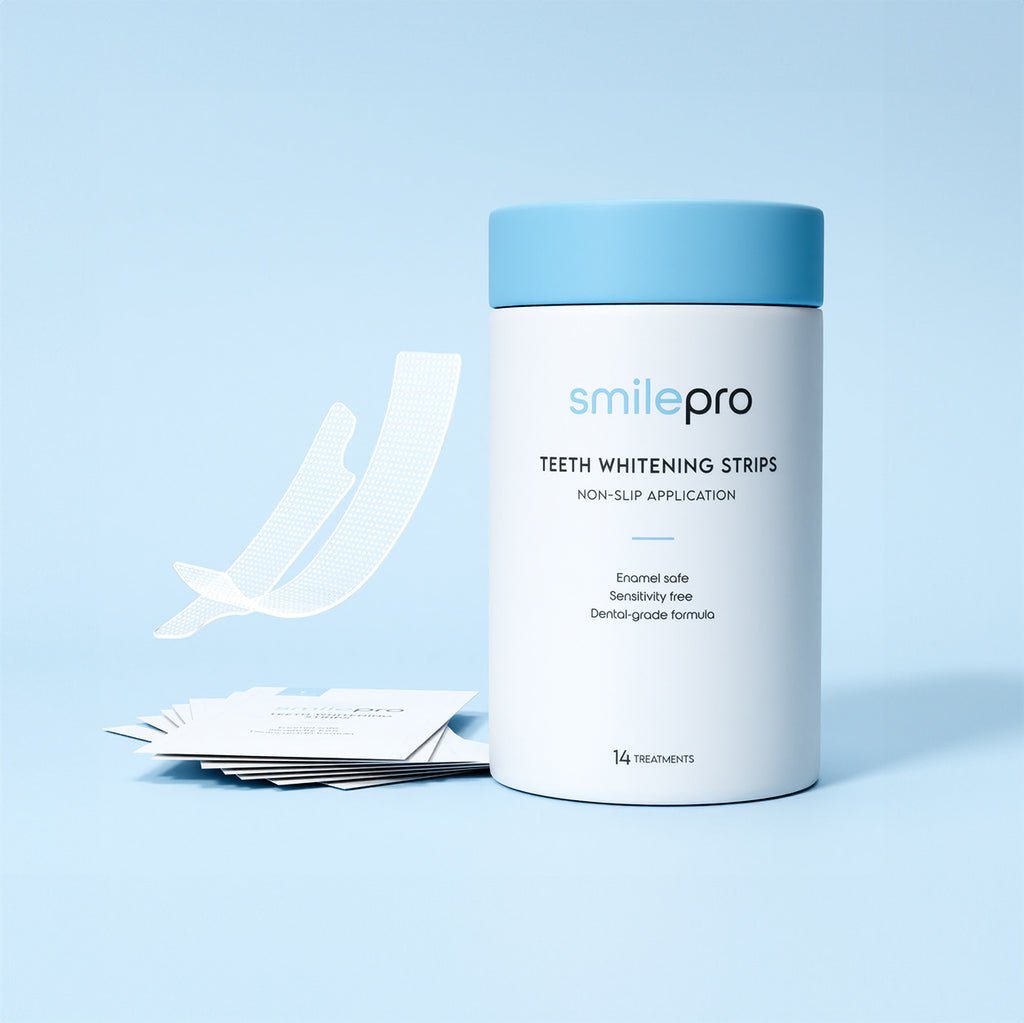
#3SmilePro Teeth Whitening Strips 7.8/10
SmilePro's strips use 6% hydrogen peroxide with 30-minute sessions and 14 treatments a pack. Also sold online at Chemist Warehouse (A$45).
Strengths
- 30-minute sessions
- 6% hydrogen peroxide, stated
- 14 treatments
Limitations
- No money-back guarantee on strips
- Opened strips cannot be returned
Price: A$44. Best for: 30-minute sessions at full Australian strength. Skip it if: you want a money-back guarantee.
Check SmilePro priceLooking for a bigger change than whitening strips can give? See our whitening kit comparison for Australia.
#4GEM Whitening Strips (dissolving) 7.3/10
Dissolving PAP strips: nothing to peel off. The treatment count comes from another retailer's listing.
Strengths
- Dissolving: nothing to remove
- PAP formula
- Stocked by Chemist Warehouse and Priceline
Limitations
- Strength not stated
- Higher price
- No guarantee stated
Price: A$44.99 at Chemist Warehouse. Best for: people who dislike removing strips. Skip it if: you want a stated strength.
#5HiSmile PAP+ Whitening Strips 7.0/10
HiSmile's PAP strips. Only 7 treatments a pack, so the highest cost per treatment here.
Strengths
- Well-known brand
- 30-minute sessions
- PAP formula
Limitations
- Only 7 treatments
- Highest cost per treatment
- Strength not stated
Price: A$35. Best for: trying a well-known brand. Skip it if: you want a full course in one pack.
Whitening strips: UK and EU
Comparison at a glance
| Product | OHA score | Whitening agent | Wear time | Treatments | Price | Per treatment | Guarantee | Best for |
|---|---|---|---|---|---|---|---|---|
| MySweetSmile PAP Whitening Strips (21 treatments) | 8.1/10 | PAP | 30 minutes | 21 | £19.99 (was £39.99) | £0.95 | Returns if unopened | Value |
| Spotlight 14 Day Ultra Whitening Strips | 8.0/10 | PAP, hydrogen peroxide (low level) and hydroxyapatite | Up to 60 minutes | 14 | £26.99 or £44.95 (two live listings) | £1.93 to £3.21 | Returns if unopened | A multi-ingredient formula |
| SmilePro Teeth Whitening Strips (UK) | 7.8/10 | PAP | 30 minutes | 14 | £28 | £2.00 | No money-back (14-day UK/EU cancellation rights apply) | Short sessions with a PAP formula |
| Gem PAP Dissolvable Whitening Strips | 7.4/10 | PAP | About 15 minutes (dissolve) | 14 | £28 at Boots | £2.00 | Not stated | The shortest sessions |
| HiSmile PAP+ Whitening Strips | 7.1/10 | PAP | 30 minutes | 7 | £19 | £2.71 | Returns if resalable | Trying a well-known brand |
Prices and details from each brand's site or the named retailer, checked 2 October 2026. Prices change, and several are sale prices.
#1MySweetSmile PAP Whitening Strips (21 treatments) 8.1/10
PAP strips with 21 treatments for under £20 on sale: by far the lowest cost per treatment here.
Strengths
- Lowest cost per treatment
- 21 treatments
- 30-minute sessions
Limitations
- Strength not stated
- Course length differs between the brand (14 days) and Superdrug (7-day cycles)
- Opened packs not returnable
Price: £19.99 (was £39.99). Best for: value. Skip it if: you want a guarantee.
#2Spotlight 14 Day Ultra Whitening Strips 8.0/10
Spotlight's 14-day strips combine PAP, a low level of hydrogen peroxide and hydroxyapatite. Its UK site showed two prices for what reads as the same pack on the day we checked.
Strengths
- Combines three active ingredients
- 14 treatments
- £1.93 per treatment at the lower listed price
Limitations
- Two different prices listed
- Up to 60-minute sessions
- Opened packs not returnable
Price: £26.99 or £44.95 (two live listings). Best for: a multi-ingredient formula. Skip it if: you want short sessions.
#3SmilePro Teeth Whitening Strips (UK) 7.8/10
SmilePro's UK strips use PAP with 30-minute sessions and 14 treatments.
Strengths
- 30-minute sessions
- 14 treatments
- PAP formula within UK rules
Limitations
- PAP strength not stated
- No money-back guarantee on strips
Price: £28. Best for: short sessions with a PAP formula. Skip it if: price per treatment matters most.
Check SmilePro priceLooking for a bigger change than whitening strips can give? See our whitening kit comparison for UK and EU.
#4Gem PAP Dissolvable Whitening Strips 7.4/10
Dissolving PAP strips from Boots: about 15 minutes and nothing to remove.
Strengths
- Dissolve in about 15 minutes
- Nothing to remove
- Sold at Boots
Limitations
- Strength not stated
- Boots lists conflicting age guidance
- No guarantee stated
Price: £28 at Boots. Best for: the shortest sessions. Skip it if: you want a stated strength.
#5HiSmile PAP+ Whitening Strips 7.1/10
HiSmile's PAP strips: a well-known brand, but only 7 treatments a pack.
Strengths
- Well-known brand
- 30-minute sessions
- Low pack price
Limitations
- Only 7 treatments
- Strength not stated
- No money-back guarantee
Price: £19. Best for: trying a well-known brand. Skip it if: you want a full course in one pack.
Whitening strips: United States
Comparison at a glance
| Product | OHA score | Whitening agent | Wear time | Treatments | Price | Per treatment | Guarantee | Best for |
|---|---|---|---|---|---|---|---|---|
| Crest 3D Whitestrips Professional White | 8.4/10 | Hydrogen peroxide (strength not stated) | 45 minutes | 20 | $38.46 at Walmart (was $44.97) | $1.92 | 60-day money-back | Value with a long guarantee |
| SNOW DiamondSeries Dissolving Strips (21 treatments) | 8.0/10 | Hydrogen peroxide with nano-hydroxyapatite | Dissolve (under 15 min per a video caption) | 21 | $44 | $2.10 | 30-day money-back | Dissolving strips with a guarantee |
| SmilePro Teeth Whitening Strips | 7.8/10 | 6% hydrogen peroxide | 30 minutes | 14 | $33 | $2.36 | No money-back (opened strips not returnable) | A stated strength with short sessions |
| Lumineux Whitening Strips (21 treatments) | 7.3/10 | Peroxide-free (sea salt and oils) | 30 minutes | 21 | $50 | $2.38 | 30-day money-back | People avoiding peroxide |
| HiSmile PAP+ Whitening Strips | 7.0/10 | PAP | 30 minutes | 7 | $29 | $4.14 | Returns if resalable | Trying a well-known brand |
Prices and details from each brand's site or the named retailer, checked 2 October 2026. Prices change, and several are sale prices.
#1Crest 3D Whitestrips Professional White 8.4/10
Crest's Professional White strips: 20 treatments, the lowest cost per treatment here at Walmart's price, and a 60-day money-back guarantee.
Strengths
- Lowest cost per treatment
- 60-day money-back guarantee
- 20 treatments
Limitations
- 45-minute sessions
- Strength not stated
- Crest and Walmart give different minimum ages
Price: $38.46 at Walmart (was $44.97). Best for: value with a long guarantee. Skip it if: you want short sessions.
#2SNOW DiamondSeries Dissolving Strips (21 treatments) 8.0/10
Dissolving peroxide strips with nano-hydroxyapatite and a 30-day money-back guarantee.
Strengths
- Dissolving: nothing to remove
- 30-day money-back guarantee
- 21 treatments
Limitations
- Strength not stated
- Session time only in a video caption
- Higher pack price
Price: $44. Best for: dissolving strips with a guarantee. Skip it if: you want a stated strength.
#3SmilePro Teeth Whitening Strips 7.8/10
SmilePro's strips state their strength (6% hydrogen peroxide) and take 30 minutes a session.
Strengths
- Strength stated: 6% hydrogen peroxide
- 30-minute sessions
- $33 for 14 treatments
Limitations
- No money-back guarantee on strips
- Opened strips cannot be returned
Price: $33. Best for: a stated strength with short sessions. Skip it if: you want a guarantee.
Check SmilePro priceLooking for a bigger change than whitening strips can give? See our whitening kit comparison for United States.
#4Lumineux Whitening Strips (21 treatments) 7.3/10
Peroxide-free strips using sea salt and oils, with a 30-day money-back guarantee.
Strengths
- Peroxide-free
- 30-day money-back guarantee
- 21 treatments
Limitations
- No peroxide or PAP whitening agent
- Highest pack price here
Price: $50. Best for: people avoiding peroxide. Skip it if: you want the strongest whitening.
#5HiSmile PAP+ Whitening Strips 7.0/10
HiSmile's PAP strips: only 7 treatments a pack, so the highest cost per treatment here.
Strengths
- Well-known brand
- 30-minute sessions
- Lowest pack price here
Limitations
- Only 7 treatments
- Highest cost per treatment
- No money-back guarantee
Price: $29. Best for: trying a well-known brand. Skip it if: you want a full course in one pack.
How we rated these products
We compared each product on four criteria: what it offers for the price, its features and formula, what customers say, and the standards it is sold under. Each gets a score out of 10, and the OHA score is their average. Our ratings are based on research using each brand's published information and customer feedback, not on hands-on testing. See our methodology disclaimer.
Buying guide
Strength rules differ. The Dental Board of Australia says only registered dental practitioners can use or supply products with more than 6% hydrogen peroxide, so Australian strips go up to 6%. In the UK and EU, products sold to the public must contain no more than 0.1% hydrogen peroxide, so strips use PAP or very low peroxide levels. We found no national limit in the US sources we checked. See stained teeth.
Cost per treatment beats pack price. Packs range from 7 to 21 treatments, so compare the cost per treatment, and the wear time you are willing to do each day.
What to expect. Strips lighten natural enamel only, not crowns, veneers or fillings. Sensitivity and gum irritation are common and usually temporary.
Frequently asked questions
Are strips or an LED kit better?
Strips are cheaper and need no device; LED kits pair a gel with a mouth tray and light. The evidence that the light itself adds much is mixed. Compare both in our kit guides for Australia, the UK and the US.
Will strips make my teeth sensitive?
They can. The NHS lists sensitivity and sore gums as common side effects of whitening, usually short-lived. See whitening with sensitive teeth.
Do strips work on crowns or veneers?
No. Whitening changes natural enamel only, so crowns, veneers and fillings stay the same shade.
Our verdict
Each market's best value comes from a different brand: Oral-B in Australia, MySweetSmile in the UK and Crest in the US. White Glo, SNOW and Crest come with money-back guarantees. SmilePro's strips use 30-minute sessions, with 6% hydrogen peroxide in Australia and the US and PAP in the UK.