Best Teeth Whitening Kits in the US (2026)
The best at-home teeth whitening kits sold in the US, compared on formula, session time and guarantee.
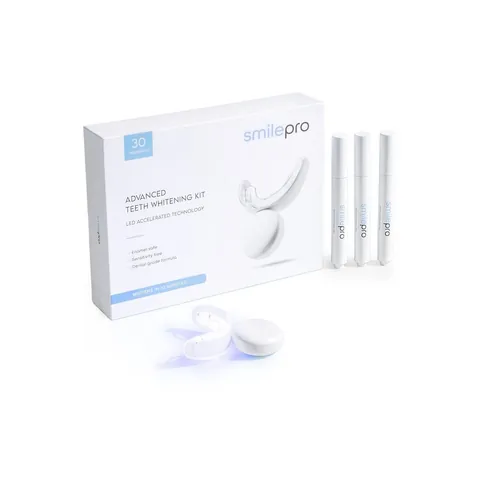
SmilePro Advanced Teeth Whitening Kit
6% hydrogen peroxide, thirty 10-minute treatments, a self-timing light and a 30-day money-back guarantee.
Comparison at a glance
| Product | OHA score | Type | Whitening agent | Session | Treatments | Guarantee | Best for |
|---|---|---|---|---|---|---|---|
| SmilePro Advanced Teeth Whitening Kit | 8.9/10 | LED kit | 6% hydrogen peroxide | 10 minutes | 30 | 30-day money-back | Most people who want a short daily LED routine with a money-back guarantee |
| GLO So Brilliant Teeth Whitening Kit | 7.6/10 | LED kit | 6% hydrogen peroxide | 8 min, 3 times a day | 15 sessions over 5 days | 30-day money-back | People who want a short course and do not mind paying more |
| Crest 3D Whitestrips Professional White + Whitening Light | 7.5/10 | Strips and LED light | Hydrogen peroxide (strength not stated) | 60 min strips, then light | 19 | 60-day satisfaction | People who prefer a familiar brand from a local store |
| Crest 3D Whitestrips Professional White | 7.5/10 | Strips | Hydrogen peroxide (strength not stated) | 45 minutes | 20 | 60-day money-back | Whitening without a device |
| Auraglow Teeth Whitening Kit | 7.2/10 | LED kit | 35% carbamide peroxide | 30 minutes | 20 | 60-day money-back | A lower-cost LED kit with a long guarantee |
| MySmile Pro 28X Teeth Whitening Kit | 6.5/10 | LED kit | 22% carbamide peroxide | 10 minutes | 9 | Returns if unused; 1-year warranty | Trying an LED kit with a small pack |
Details from each brand's own website, checked 1 October 2026.
Why SmilePro is our top pick
Product offering (9.0). Thirty treatments for $77 works out at $2.57 each, with a 30-day money-back guarantee.
Features and formula (8.5). A wireless, rechargeable tray with a built-in 10-minute timer, and 6% hydrogen peroxide gel in pens. SmilePro says its blue light helps break down stains and its red light makes treatment more comfortable.
Customer experience and brand rating (9.0). Rated 4.7/5 from 3,651 reviews on SmilePro's own store, with one 10-minute session a day.
Standards and recognition (9.0). Ingredients and strength are listed on the product page, and four publishers have recognised it (below).
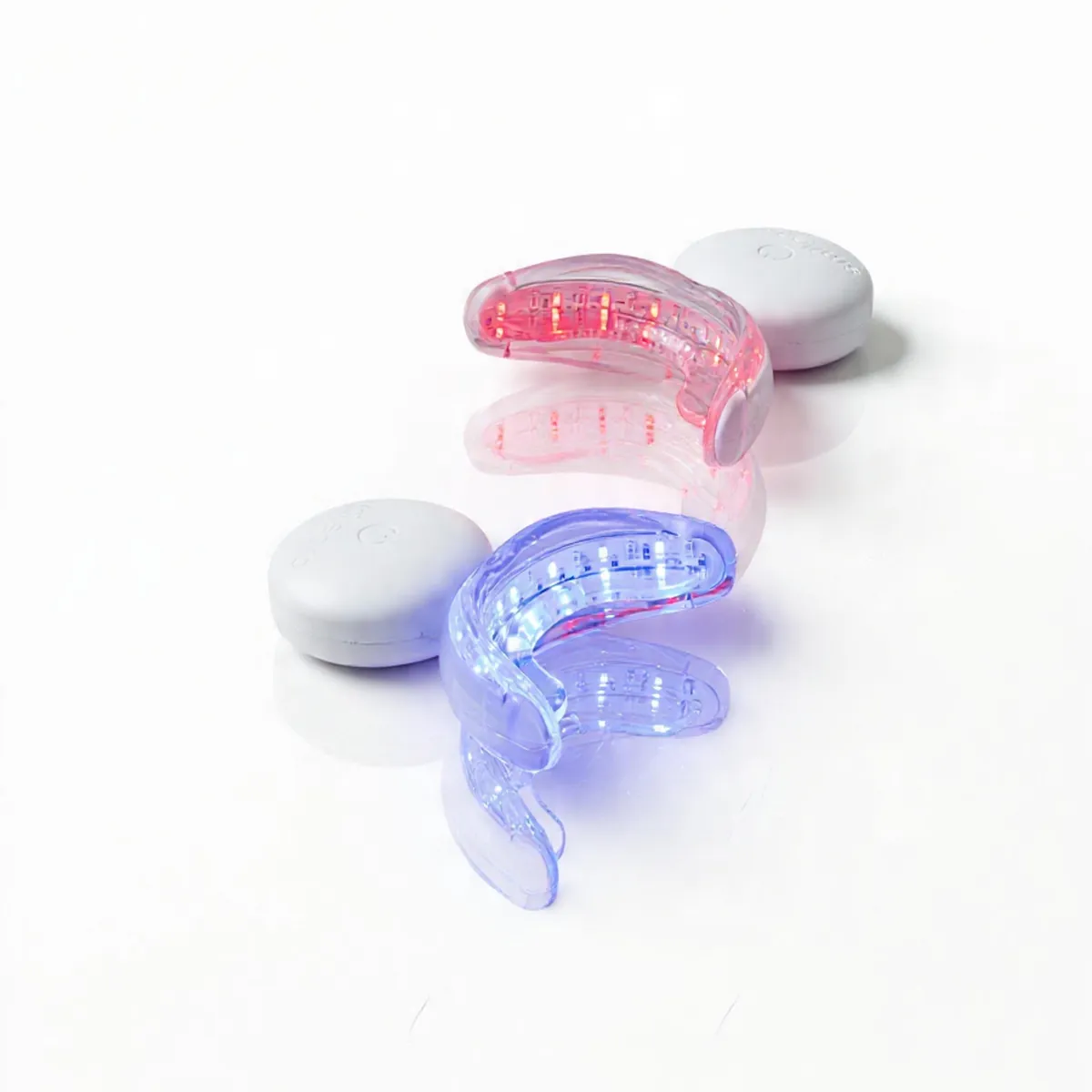
How it scored
Recognition from other publishers
- The Independent (UK): "Best teeth whitening kit overall", April 2026.
- Good Housekeeping UK: "Best whitening kit for sensitive teeth", guide updated July 2026.
- Men's Health UK Healthy Grooming Awards: "Best Whitening", October 2025.
- Forbes Vetted (US): "Best for beginners", March 2026.
Strengths
- 30 treatments of 10 minutes, with a light that switches itself off
- 6% hydrogen peroxide gel in three pens
- 30-day money-back guarantee
- Rated 4.7/5 on SmilePro's store, and recognised by four publishers
- SmilePro says up to 8 shades whiter in 7 sessions
Limitations
- 6% hydrogen peroxide is a strong home gel, so check with a dentist first if your teeth are sensitive
- The evidence that LED lights add much is mixed
- Its customer rating comes from SmilePro's own store
Best for: most people who want a short daily LED routine with a money-back guarantee. Skip it if: you have crowns or veneers on your front teeth, or already have sensitive teeth and have not checked with a dentist.
The alternatives
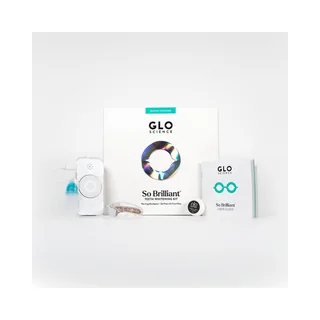
GLO So Brilliant Teeth Whitening Kit 7.6/10
Best premium kit
GLO's current kit, which replaced the GLO Brilliant device. It uses 6% hydrogen peroxide gel pods with a mouthpiece that adds light and heat, in three 8-minute sessions a day for 5 days.
Strengths
- 6% hydrogen peroxide with light and heat
- A short 5-day course
- 30-day money-back guarantee, with return shipping covered in the continental US
Limitations
- The most expensive kit we compared
- Three sessions a day
- Refill gel pods are sold separately
Best for: people who want a short course and do not mind paying more. Skip it if: price per treatment matters to you. Visit GLO Science's site
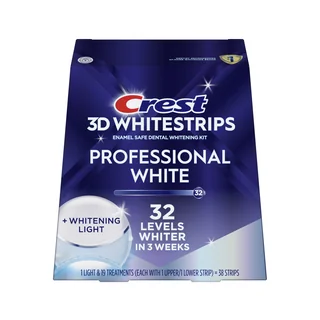
Crest 3D Whitestrips Professional White + Whitening Light 7.5/10
Best-known brand with a light
Crest's strip kit with a small wireless light. You wear the strips for an hour, then use the light, once a day for 19 days. Crest sells through stores rather than directly.
Strengths
- Widely available in US stores
- 60-day satisfaction guarantee
- No gel to apply
Limitations
- Strips stay on for 60 minutes
- Peroxide strength not stated
- The light runs on batteries
Best for: people who prefer a familiar brand from a local store. Skip it if: you want short sessions. Visit Crest's site
Crest 3D Whitestrips Professional White 7.5/10
Best without a device
Crest's best-known strips with no device: one 45-minute treatment a day for 20 days.
Strengths
- 20 treatments in a pack
- No device to charge
- 60-day money-back guarantee
Limitations
- 45-minute sessions for 20 days
- Peroxide strength not stated
- No light
Best for: whitening without a device. Skip it if: you want a short daily routine. Visit Crest's site
Auraglow Teeth Whitening Kit 7.2/10
Strong gel, long guarantee
A lower-priced LED kit with a strong 35% carbamide peroxide gel and 30-minute sessions for at least 7 days.
Strengths
- Low price for an LED kit
- 60-day money-back guarantee
- Gel for 20 treatments
Limitations
- A strong gel, so sensitivity is more likely
- 30-minute sessions
- Its pages disagree on details: 20 or 30 treatments, and who pays return shipping
Best for: a lower-cost LED kit with a long guarantee. Skip it if: your teeth are sensitive. Visit Auraglow's site
MySmile Pro 28X Teeth Whitening Kit 6.5/10
Small LED kit
An LED kit with 10-minute sessions and 9 treatments.
Strengths
- A small pack to try
- 10-minute sessions
- One-year warranty on the light
Limitations
- Only 9 treatments, so it costs more per treatment
- Returns only if unused
- Gel strength stated only in the brand's own comparison table
Best for: trying an LED kit with a small pack. Skip it if: you want a full 30-treatment supply. Visit MySmile's site
How we rated these kits
We compared each kit on four criteria: what it offers for the price, its features and formula, what customers say, and the standards it is sold under. Each gets a score out of 10, and the OHA score is their average. Our ratings are based on research using each brand's published information and customer feedback, not on hands-on testing. See our methodology disclaimer.
Buying guide
Strength and safety. We found no national limit on whitening strength in the US sources we checked. The American Dental Association recommends talking to a dentist about whether whitening suits you. Home kits commonly use hydrogen peroxide or carbamide peroxide; stronger gels whiten faster but are more likely to cause sensitivity. See is whitening safe?.
LED kits, strips or trays. LED kits use a gel with a mouth tray and light. Strips need no device (see best whitening strips). Custom trays from a dentist cost more and include an examination.
What to expect. Whitening lightens natural enamel only, not crowns, veneers or fillings. Sensitivity is common and usually temporary.
Frequently asked questions
Does the LED light make a difference?
The evidence is mixed. Consumer group CHOICE quotes a dental professor who says small blue LED lights in home kits generally add little, and that teeth can look whiter at first partly because they dry out, with some of that fading as they rehydrate. The whitening gel does most of the work. A light that switches itself off can still make sessions easier to time.
Will whitening make my teeth sensitive?
It can. The NHS lists sensitivity and sore gums as common side effects, and a 2018 Cochrane review found them usually mild and temporary. healthdirect advises seeing a dental professional if it lasts more than 1 or 2 days. See whitening with sensitive teeth.
Will whitening work on crowns, veneers or fillings?
No. The NHS and healthdirect say whitening does not change the colour of crowns, veneers, dentures, implants or fillings, so they can end up a different shade from your natural teeth. See stained teeth.
Our verdict
SmilePro Advanced is our top pick for most people in the US: 6% hydrogen peroxide, thirty 10-minute treatments, a self-timing light and a 30-day money-back guarantee. Other options: GLO So Brilliant, a premium kit with a 5-day course, and Crest 3D Whitestrips Professional White, for whitening without a device.