Is Teeth Whitening Safe?
What health bodies and the research say about side effects, who should not whiten, and the legal limits.
What the Evidence Says
The American Dental Association says temporary tooth sensitivity and gum irritation are the most common side effects of whitening, and that both are usually mild and pass. The 2018 Cochrane review of home whitening found the same, more often with stronger products, and rated the evidence on how well home whitening works as low to very low certainty.
The ADA also reports a 2022 systematic review that found hydrogen peroxide whitening products do not appear to cause cancer of the lining of the mouth. Whitening only works on natural teeth, not on crowns, veneers, dentures, implants or fillings (NHS, healthdirect).
Risks and Limitations
Cracked teeth or untreated problems
healthdirect says strong gel can cause pain or further damage in cracked teeth, and that whitening is not recommended with gum disease, cracks or holes in the teeth, or untreated dental problems.
Burns and swallowing
healthdirect says strong gel can burn the lips, gums and tongue and is dangerous to swallow. The ADA says gum irritation usually comes from poorly fitting trays or gel getting onto the gums.
Home remedies
The ADA says the limited studies on do-it-yourself methods, such as acidic fruit, vinegar or oil pulling, raise questions about how well they work and how safe they are.
Who Should Avoid Whitening
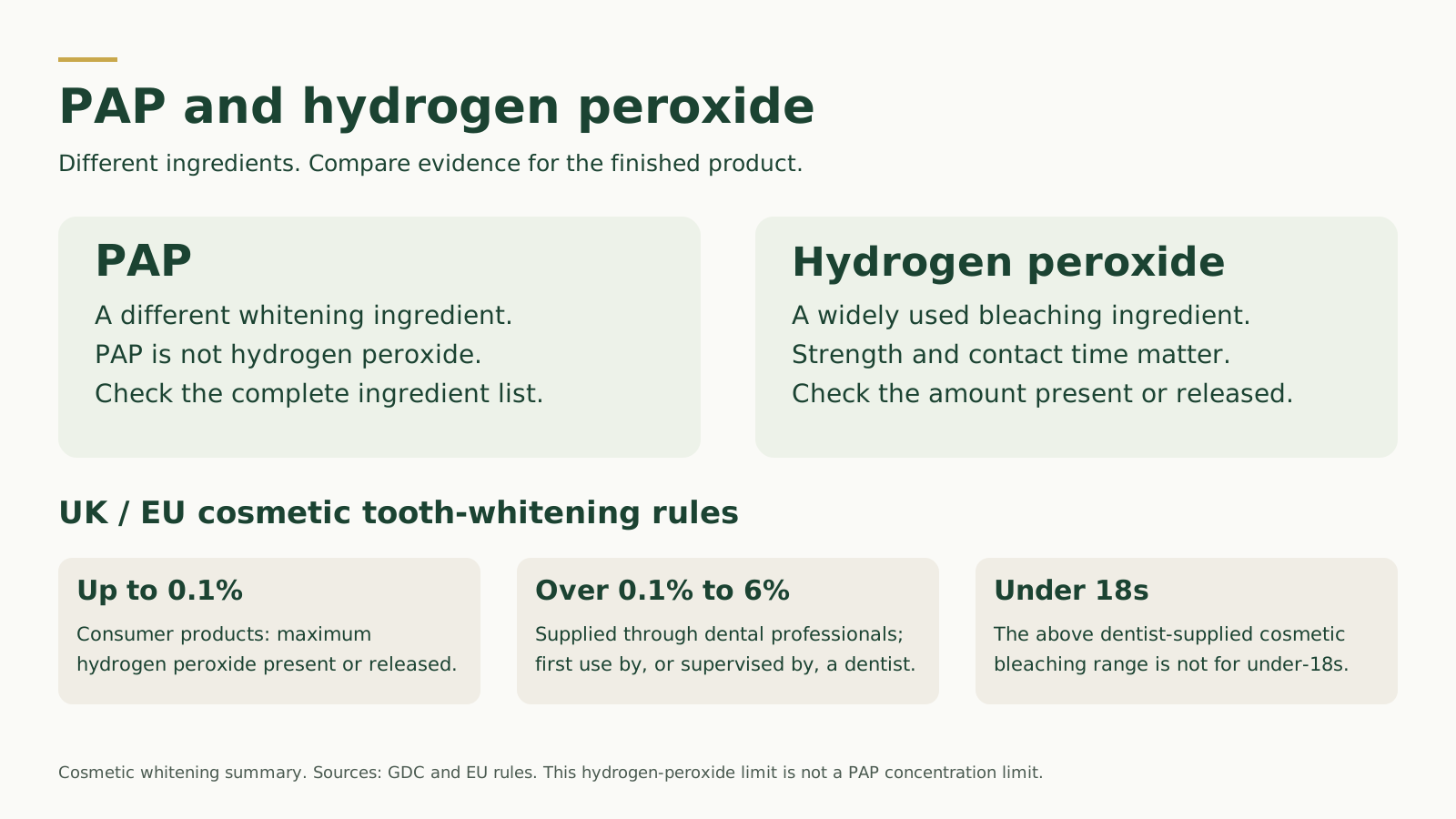
- Under-18s: UK and EU rules restrict whitening products above 0.1% hydrogen peroxide to adults, and the NHS says whitening is not done if you are 17 or younger.
- People with unhealthy teeth or gums, gum disease, cracks or holes in the teeth, or untreated dental problems (NHS, healthdirect).
- People who are pregnant or breastfeeding: the NHS says whitening is not recommended.
- People with sensitive teeth: healthdirect says whitening is not recommended, so talk to a dentist first.