Best Electric Toothbrushes (2026)
Our 2026 electric toothbrush reviews compare the brushes on sale in Australia, the UK and the US on cleaning action, modes, pressure sensor, battery, app, warranty and price. Prices differ a lot between countries, so pick your market below.
Top picks at a glance
- Australia: 1. Philips Sonicare DiamondClean 9000 (8.6); 2. Oral-B iO9 (8.4); 3. SmilePro Sonic Toothbrush (8.3)
- UK and EU: 1. Oral-B iO9 (8.6); 2. Philips Sonicare DiamondClean 9000 (8.5); 3. SmilePro Sonic Toothbrush (8.3)
- United States: 1. Oral-B iO9 (8.8); 2. Philips Sonicare DiamondClean 9000 (8.6); 3. SmilePro Sonic Toothbrush (8.3)
OHA scores out of 10. Full rankings, prices and details for your market below.
Electric toothbrushes: Australia
Comparison at a glance
| Product | OHA score | Cleaning action | Speed | Modes | Pressure sensor | Battery | App | Warranty | Price | Best for |
|---|---|---|---|---|---|---|---|---|---|---|
| Philips Sonicare DiamondClean 9000 | 8.6/10 | Sonic | 62,000 movements a minute | 4 modes, 3 intensities | Yes | 14 days | Yes | 2 years | A$319 at JB Hi-Fi (was A$369) | A premium sonic brush |
| Oral-B iO9 | 8.4/10 | Oscillating-rotating with micro-vibrations | Not stated | 7 | Yes | Up to 2 weeks (Shaver Shop) | Yes | Up to 3 years if registered | A$749 at Shaver Shop | The most features |
| SmilePro Sonic Toothbrush | 8.3/10 | Sonic | 48,000 vibrations a minute | 5 | Not stated | Up to 180 days (brand claim) | No | 1 year | A$89 | A low-cost sonic brush with a steriliser |
| Oral-B iO2 | 8.0/10 | Oscillating-rotating with micro-vibrations | Not stated | 3 | Yes | 4 weeks (Oral-B) | No | Not stated by retailer | A$68.99 at Chemist Warehouse (was A$139.99) | A pressure sensor on a budget |
| Philips Sonicare 3100 | 7.6/10 | Sonic | 31,000 movements a minute (Philips UK) | 1 mode, 3 intensities | Yes | 14 days | No | 2 years | A$94.99 at Chemist Warehouse (RRP A$159) | A simple sonic brush |
Prices and details from each brand's site or the named retailer, checked 2 October 2026. Prices change, and several are sale prices.
#1Philips Sonicare DiamondClean 9000 8.6/10
Philips' premium sonic brush: 4 modes with 3 intensities, a pressure sensor, 14-day battery, an app and a 2-year warranty.
Strengths
- 62,000 movements a minute
- Pressure sensor and app
- 2-year warranty
Limitations
- Premium price
- The charger supplied differs by model number
Price: A$319 at JB Hi-Fi (was A$369). Best for: a premium sonic brush. Skip it if: you want the lowest price.
#2Oral-B iO9 8.4/10
Oral-B's flagship, with a pressure sensor, a colour display, a 2-minute timer, an app and a travel charging case.
Strengths
- Pressure sensor
- Colour display and app
- 7 modes
Limitations
- Most expensive brush here
- Battery life not stated by Oral-B
Price: A$749 at Shaver Shop. Best for: the most features. Skip it if: price matters.
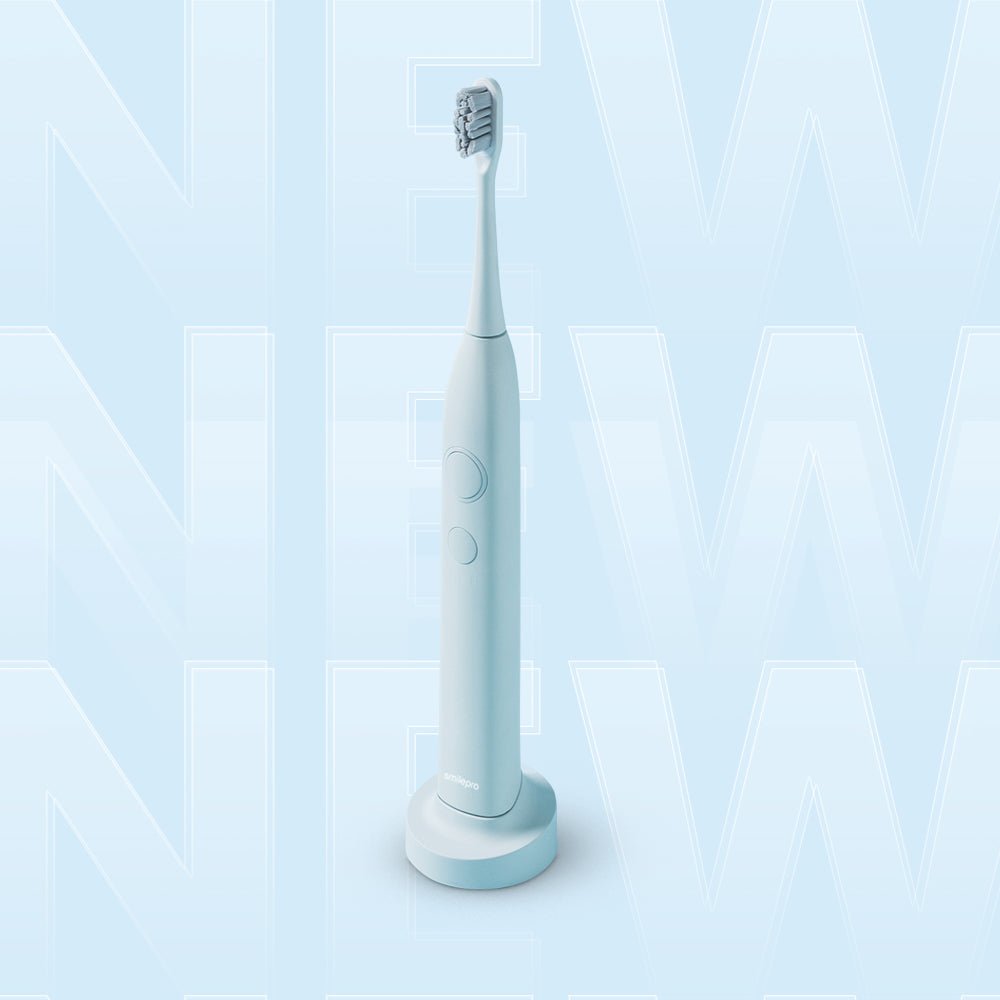
#3SmilePro Sonic Toothbrush 8.3/10
A sonic brush with 5 modes, a 2-minute timer with 30-second alerts, wireless charging and a wall-mounted UV steriliser. It does not state a pressure sensor, and its warranty is 1 year.
Strengths
- Up to 48,000 vibrations a minute, 5 modes
- UV steriliser case included
- Up to 180 days per charge (SmilePro's claim, depending on use)
- Two brush heads included
Limitations
- No pressure sensor stated
- No app
- 1-year warranty
- No money-back guarantee on the toothbrush
Price: A$89. Best for: a low-cost sonic brush with a steriliser. Skip it if: you want a pressure sensor or app.
Check SmilePro priceLooking for a bigger change than electric toothbrushes can give? See our whitening kit comparison for Australia.
#4Oral-B iO2 8.0/10
Oral-B's entry-level iO brush: 3 modes, a pressure sensor, a 2-minute timer and a 4-week battery (Oral-B's figure).
Strengths
- Pressure sensor
- Low price
- 4-week battery (Oral-B)
Limitations
- No app
- Only 3 modes
- Retailers list the modes differently
Price: A$68.99 at Chemist Warehouse (was A$139.99). Best for: a pressure sensor on a budget. Skip it if: you want more modes.
#5Philips Sonicare 3100 7.6/10
Philips' budget sonic brush, with a pressure sensor, a timer and a 14-day battery.
Strengths
- Pressure sensor
- 14-day battery
- 2-year warranty
Limitations
- One cleaning mode
- No app
Price: A$94.99 at Chemist Warehouse (RRP A$159). Best for: a simple sonic brush. Skip it if: you want several modes.
Electric toothbrushes: UK and EU
Comparison at a glance
| Product | OHA score | Cleaning action | Speed | Modes | Pressure sensor | Battery | App | Warranty | Price | Best for |
|---|---|---|---|---|---|---|---|---|---|---|
| Oral-B iO9 | 8.6/10 | Oscillating-rotating with micro-vibrations | Not stated | 7 | Yes | Not stated by Oral-B | Yes | 2 years (Oral-B); Argos says 1 year | £200 at Argos (£500 at Oral-B's UK store) | The most features |
| Philips Sonicare DiamondClean 9000 | 8.5/10 | Sonic | 62,000 movements a minute | 4 modes, 3 intensities | Yes | 14 days | Yes | 2 years | £134.99 at Philips (was £149.99) | A premium sonic brush |
| SmilePro Sonic Toothbrush | 8.3/10 | Sonic | 48,000 vibrations a minute | 5 | Not stated | Up to 180 days (brand claim) | No | 1 year | £48 | A low-cost sonic brush with a steriliser |
| Oral-B iO2 | 8.0/10 | Oscillating-rotating with micro-vibrations | Not stated | 3 | Yes | 4 weeks (Oral-B) | No | 2 years (Argos) | £45 at Argos (was £100) | A pressure sensor on a budget |
| Philips Sonicare 3100 | 7.8/10 | Sonic | 31,000 movements a minute | 1 mode, 3 intensities | Yes | 14 days | No | 2 years | £40.39 at Philips (was £45.39) | A simple sonic brush |
Prices and details from each brand's site or the named retailer, checked 2 October 2026. Prices change, and several are sale prices.
#1Oral-B iO9 8.6/10
Oral-B's flagship, with a pressure sensor, a colour display, a 2-minute timer, an app and a travel charging case.
Strengths
- Pressure sensor
- Colour display and app
- 7 modes
Limitations
- Most expensive brush here
- Battery life not stated by Oral-B
Price: £200 at Argos (£500 at Oral-B's UK store). Best for: the most features. Skip it if: price matters.
#2Philips Sonicare DiamondClean 9000 8.5/10
Philips' premium sonic brush: 4 modes with 3 intensities, a pressure sensor, 14-day battery, an app and a 2-year warranty.
Strengths
- 62,000 movements a minute
- Pressure sensor and app
- 2-year warranty
Limitations
- Premium price
- The charger supplied differs by model number
Price: £134.99 at Philips (was £149.99). Best for: a premium sonic brush. Skip it if: you want the lowest price.
#3SmilePro Sonic Toothbrush 8.3/10
A sonic brush with 5 modes, a 2-minute timer with 30-second alerts, wireless charging and a wall-mounted UV steriliser. It does not state a pressure sensor, and its warranty is 1 year.
Strengths
- Up to 48,000 vibrations a minute, 5 modes
- UV steriliser case included
- Up to 180 days per charge (SmilePro's claim, depending on use)
- Two brush heads included
Limitations
- No pressure sensor stated
- No app
- 1-year warranty
- No money-back guarantee on the toothbrush
Price: £48. Best for: a low-cost sonic brush with a steriliser. Skip it if: you want a pressure sensor or app.
Check SmilePro priceLooking for a bigger change than electric toothbrushes can give? See our whitening kit comparison for UK and EU.
#4Oral-B iO2 8.0/10
Oral-B's entry-level iO brush: 3 modes, a pressure sensor, a 2-minute timer and a 4-week battery (Oral-B's figure).
Strengths
- Pressure sensor
- Low price
- 4-week battery (Oral-B)
Limitations
- No app
- Only 3 modes
- Retailers list the modes differently
Price: £45 at Argos (was £100). Best for: a pressure sensor on a budget. Skip it if: you want more modes.
#5Philips Sonicare 3100 7.8/10
Philips' budget sonic brush, with a pressure sensor, a timer and a 14-day battery.
Strengths
- Pressure sensor
- 14-day battery
- 2-year warranty
Limitations
- One cleaning mode
- No app
Price: £40.39 at Philips (was £45.39). Best for: a simple sonic brush. Skip it if: you want several modes.
Electric toothbrushes: United States
Comparison at a glance
| Product | OHA score | Cleaning action | Speed | Modes | Pressure sensor | Battery | App | Warranty | Price | Best for |
|---|---|---|---|---|---|---|---|---|---|---|
| Oral-B iO9 | 8.8/10 | Oscillating-rotating with micro-vibrations | Not stated | 7 | Yes | Not stated by Oral-B | Yes | 2 years | $169.99 at Oral-B (was $329.99) | The most features |
| Philips Sonicare DiamondClean 9000 | 8.6/10 | Sonic | 62,000 movements a minute | 4 modes, 3 intensities | Yes | 14 days | Yes | 2 years | $199.96 at Philips | A premium sonic brush |
| SmilePro Sonic Toothbrush | 8.3/10 | Sonic | 48,000 vibrations a minute | 5 | Not stated | Up to 180 days (brand claim) | No | 1 year | $63 | A low-cost sonic brush with a steriliser |
| Oral-B iO Series 2 | 8.0/10 | Oscillating-rotating with micro-vibrations | Not stated | 3 | Yes | 4 weeks (Oral-B) | No | 2 years | $44.99 at Oral-B (was $64.99) | A pressure sensor on a budget |
| Philips Sonicare 4100 | 7.8/10 | Sonic | 31,000 movements a minute | 1 mode, 2 intensities | Yes | 14 days | No | 2 years | $49.96 at Philips | A simple sonic brush |
Prices and details from each brand's site or the named retailer, checked 2 October 2026. Prices change, and several are sale prices.
#1Oral-B iO9 8.8/10
Oral-B's flagship (the earlier iO9 generation in the US), with a pressure sensor, a colour display, a 2-minute timer, an app and a travel charging case. On sale at about half its usual price.
Strengths
- Pressure sensor
- Colour display and app
- 7 modes
Limitations
- Brush heads $29.99 for two at Oral-B
- Battery life not stated by Oral-B
Price: $169.99 at Oral-B (was $329.99). Best for: the most features. Skip it if: price matters.
#2Philips Sonicare DiamondClean 9000 8.6/10
Philips' premium sonic brush: 4 modes with 3 intensities, a pressure sensor, 14-day battery, an app and a 2-year warranty.
Strengths
- 62,000 movements a minute
- Pressure sensor and app
- 2-year warranty
Limitations
- Premium price
- The charger supplied differs by model number
Price: $199.96 at Philips. Best for: a premium sonic brush. Skip it if: you want the lowest price.
#3SmilePro Sonic Toothbrush 8.3/10
A sonic brush with 5 modes, a 2-minute timer with 30-second alerts, wireless charging and a wall-mounted UV steriliser. It does not state a pressure sensor, and its warranty is 1 year.
Strengths
- Up to 48,000 vibrations a minute, 5 modes
- UV steriliser case included
- Up to 180 days per charge (SmilePro's claim, depending on use)
- Two brush heads included
Limitations
- No pressure sensor stated
- No app
- 1-year warranty
- No money-back guarantee on the toothbrush
Price: $63. Best for: a low-cost sonic brush with a steriliser. Skip it if: you want a pressure sensor or app.
Check SmilePro priceLooking for a bigger change than electric toothbrushes can give? See our whitening kit comparison for United States.
#4Oral-B iO Series 2 8.0/10
Oral-B's entry-level iO brush: 3 modes, a pressure sensor, a 2-minute timer and a 4-week battery (Oral-B's figure).
Strengths
- Pressure sensor
- Low price
- 4-week battery (Oral-B)
Limitations
- No app
- Only 3 modes
- Retailers list the modes differently
Price: $44.99 at Oral-B (was $64.99). Best for: a pressure sensor on a budget. Skip it if: you want more modes.
#5Philips Sonicare 4100 7.8/10
Philips' budget sonic brush, with a pressure sensor, a timer and a 14-day battery.
Strengths
- Pressure sensor
- 14-day battery
- 2-year warranty
Limitations
- One cleaning mode
- No app
Price: $49.96 at Philips. Best for: a simple sonic brush. Skip it if: you want several modes.
How we rated these products
We compared each product on four criteria: what it offers for the price, its features and formula, what customers say, and the standards it is sold under. Each gets a score out of 10, and the OHA score is their average. Our ratings are based on research using each brand's published information and customer feedback, not on hands-on testing. See our methodology disclaimer.
Buying guide
Sonic or oscillating-rotating? Philips and SmilePro brushes are sonic; Oral-B heads oscillate and rotate. Whichever you choose, brush for two minutes twice a day. See how to brush your teeth.
Pressure sensors. A sensor warns you when you press too hard. The comparison table shows which brushes have one.
Count the running cost. Replacement heads add up over a year, and prices vary a lot between retailers and countries. Check the head price before you buy.
Frequently asked questions
Is an expensive electric toothbrush worth it?
Every brush here has a two-minute timer, and the budget Oral-B and Philips brushes also have a pressure sensor. The flagships add apps, displays and more modes.
How often should I replace the brush head?
Follow the brand's guidance, and replace it sooner if the bristles are worn. See how to brush your teeth.
Which mode should I use for sensitive teeth?
The Oral-B and SmilePro brushes here have a sensitive mode; the Philips brushes offer lower intensities. Brush gently whichever type you choose. See tooth sensitivity.
Our verdict
For the most features, the Oral-B iO9 leads in the UK and US, and the Philips DiamondClean 9000 in Australia, where the iO9 costs much more. For a pressure sensor on a budget, the Oral-B iO2 is hard to beat. SmilePro's Sonic Toothbrush is a sonic brush with 5 modes and a UV steriliser, with a 1-year warranty and no pressure sensor stated.